Saturday, March 27, 2010

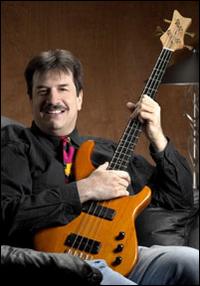
Dr. John Ciambotti


I just learned today that Dr. John Ciambotti has passed on. He was my chiropractor for years, but so much more. He was the bassist in the underground, influential band Clover, who became Elvis Costello's back-up band on My Aim Is True, Huey Lewis' band (Had songwriting credit on a song or two on Huey Lewis album "Sports"), he played and managed Lucinda Williams, played with John Prine, turned down the Rolling Stones when Bill Wyman left the band, had stories of hanging with just about everybody in Rock & Roll.

He helped a lot of musicians in LA with repetitive motion problems, I benefited greatly from him and know many who have. We always shot the shit at our appointments and talked "shop". He was way into playing upright bass again. My heart goes out to his family.

Dr. John will be sorely missed.

Saturday, March 13, 2010

Gig Advice from Dave Carpenter


I was fortunate enough to study with the great bassist Dave Carpenter (Allan Holdsworth, Buddy Rich, Woody Herman, Boz Skaggs, Peter Erskine) for about a year-and-a-half while I was attending CalArts and I learned a lot from him about music and professionalism. I remember that he had some great, simple advice about the requirements for taking a gig.

Dave's simple criteria is as follows:

  1. Who's it with?-You don't want to turn down a gig to play with a big name or a local guy that will take your career to the next level and provide you with real opportunity.
  2. Where's it at?-You want to make sure you can physically get to the gig and you need to know if the gig is down the street or possibly in another state or country.
  3. How much? You want to know what you will be compensated for your time and skills.
This was the order. Notice that money was last. Dave's reasoning was this. If you are offered a gig with Wayne Shorter at a club 5 miles away, but it only paid $50 bucks, you take it. The exposure alone was worth the little money and you get to play with Wayne!

If you are offered a casual gig with a top forty group in 120 miles away, but it pays $300, you take it. Money compensates you for the 7 or more hours of time to do your job.

If Murph and the Magic Tones calls you for a gig at the Holiday Inn, 90 miles away for $25, you can respectfully decline (unless you are really hard up!)

The thing I really liked about this is that it really puts the music and your experience first. If the above scenarios all were offered on the same evening, the Wayne Shorter gig for $50 is still probably the gig to take because simply, the exposure would most likely pay you back ten-fold to the higher paying casual and it takes less of your time. As well, it still gives you time to schedule other gigs or lessons with students before the evenings performance.

Saturday, February 6, 2010

Top Ten Electric Miles Davis Recordings


I decided to list my top ten favorite Miles Davis recordings of the electric period. Miles is not just one of the biggest musicians of all time, but one of the biggest artists of all time- regardless of discipline. His entire career output is of the highest quality, extremely forward thinking, and extremely varied. I am a big fan of all of his periods, but the area I think he his going to be remembered the most is for his revolutionary electric period. In this period he not only created cutting edge music, but he actually invented a new genre or two and with 'On The Corner', he and Teo Macero pioneered and revolutionized modern record making techniques. Don't listen to those who say he sold out, they just simply have not listened. Miles' electric period, especially in the early stages before his first retirement is some of the most challenging listening you will encounter. The music is groove-oriented dissonance which keeps me going back again and again. Plus, you have the extremely amazing bass playing of Michael Henderson, one of my favorites bassists period.

So here it is:

  1. On the Corner
  2. Bitches Brew
  3. In Concert: Live at Philharmonic Hall
  4. In a Silent Way
  5. Agharta
  6. A Tribute to Jack Johnson
  7. Live-Evil
  8. Pangaea
  9. Dark Magus: Live At Carnegie Hall
  10. Get Up with It

Monday, January 18, 2010

Ornette Coleman's 2007 Lifetime Achievement Speech


I found a transcript of Ornette Colemans 2007 Lifetime Achievement award, acceptance speech on The Jazz Clinic blog by Matt (no last name and actually from his old blog site) and even though it is about three years old now, I thought it was too good, beautiful, and timeless to pass up. I remember Aashish Khan (who himself was also nominated along with Zakir Hussain for best world music album that year at the Grammies) attended the party and told me about what a beautiful speech Ornette had given that night.

image by Frank Schindelbeck

Here it is:

Ornette Coleman:

It is really very, very real to be here tonight, in relationship to life and death and I’m sure they both love each other.

I really don’t have any present thoughts about why I’m standing here other than trying to figure out something to say that could be useful to someone that believes.

One of the things I am experiencing is very important and that is: You don’t have to die to kill and you don’t have to kill to die. And above all, nothing exists that is not in the form of life because life is eternal with or without people so we are grateful for life to be here at this very moment.

For myself, I’d rather be human than to be dead. And I would also die to be human. So you can’t die, you can’t die to be neither one, regardless of what you say or think so that’s why I believe that music itself is eternal in relationship to sound, meaning, intelligence…all the things that have to have something to do with being alive because you were born and because someone else made it possible for you to be here, which we call our parents etc. etc.

For me, the most eternal thing is that I would like to live until I learn what it is and what it isn’t…that is, how do we kill death since it kills everything?

And it’s hard to realize that being in the human form is not as easy as wondering what is going to happen to you even if you do know what it is and it doesn’t depend on if you know what is going to happen to you.

No one can know anything that life creates since no one is life itself. And it’s obvious, at least I believe, it’s obvious the one reason why we as human beings get there and do things that seem to be valuable to us in relationship to intelligence… uh, what is it called…creativity and love and all the things that have to do with waking up every morning believing it’s going to be a better day today or tomorrow and yet at the same time death, life, sadness, anger, fear, all of those things are present at the same time as we are living and breathing.

It is really, really eternal, this that we are constantly being created as human beings to know that exists and it’s really, really unbelievable to know that nothing that’s alive can die unless it’s been killed. So what we should try to realize is to remove that part of what it is so that whatever we are, life is all there is and I thank you very much.

Monday, December 28, 2009

Jeff Berlin-Impact and Thoughts


I was lucky enough to study with electric bass great, Jeff Berlin a couple of times throughout my life; while I was at Musicians Institute (although I was 18 and intimidated and mostly just sat and listened to his playing), privately at The Bass Centre, when it was near Laurel Canyon (now only in London), and lastly when he taught for a year at CalArts, right before he started his Players School in Clearwater, FL.

He is, without a doubt, one of the top-two, best pedagogical experiences I have ever had for tonal improvisation. (Gary Willis and him are tied as far as I'm concerned. Both an extreme wealth of information.) I still work on the material he gave me 15 years ago; partly from procrastination on my part and mostly because of the overwhelming amount of information to absorb!

Jeff's material is not always the best in my opinion, but his playing is undeniable. A true master. Forget what people think or say about him and listen to what he plays, it is of the highest caliber and unlike any other bass player out there. No licks, all idea-based improvisation, and all with a deep knowledge of harmonic thinking.

Listen: Bass Solo on "Manos de Piedra"
Listen: Bass Solo on "Water On The Brain Pt.2"
Listen: Unaccompanied Bass solo "Dixie"


As an extra: There is a lot of bullshit reactions on the internet about Jeff (from people who don't know Jeff, or have ever met him quite frankly) and some of his pedagogical beliefs: not using metronomes, fretless bass, 5 & 6 string basses, anti-tablature, and so on. The fact of the matter is that these are his truths and he is passionate about them. A lot of people thought Charles Mingus or Miles Davis were a dicks as well. Doesn't negate their genius, end of story.

I have to say when I studied with him, I was (and still am) a 5-string, fretless bass player and you know what? He called me on it and I explained that this is what I wanted to do (I had been playing fretless exclusively for 4 years in 1994, when I last studied with him. I didn't even own a fretted bass from 1990 to 1996). In the end, he told me, "To each his own" and talked about the extra work to get your ears developed and a couple of lessons later gave me my biggest compliment by saying that I "didn't sound like Jaco". I think that is THE highest compliment a fretless player can hear after so many were subjected to third-rate Jaco clones for so many years.

Also, on the matter of metronomes, even though Jeff doesn't advise using metronomes*, I have used metronomes all throughout my practice time, clicking only on 2&4, only on 1,2,3, or 4, etc. I think they can help a bit, but I also think that using a metronome hasn't been the major reason for success in my time feel. Over the last couple of years, I have become a bit ambivalent about them. I attribute "good time" more to the learning and thinking in subdivisions that studying Indian Tala has taught me, i.e.: What speed (subdivision) are we in? 2 speed (1/8th), 4-speed (1/16th), 3-speed (12/8)? I think that in thinking in this way, It has become easier to play with metronomes.

Let's be clear: That is the opposite effect of what is supposed to be the prescribed course of "playing w/ metronome=good time".

My observations.

*(He's hardly the only one. Tabla master, Swapan Chaudhuri also told his tala class on the first day not to use a metronome; as well, I heard West African drummer Alfred Ladzekpo tell his class to listen for speeding up and slowing down instead of using a metronome)


Monday, December 21, 2009

A List Of 21 Must Listen Fretless Bass Recordings


From the jazziness of Jaco to the wildness of Mick Karn, I've compiled a list of twenty-one recordings that have fretless bass featured, if not exclusively, at least prominently on them. This is in no way a comprehensive list, although I did try to include as many players as possible, I also tried to include many landmark albums of players like Jaco and Gary Willis, who are two of the more prominent players of the instrument.If you are serious about playing fretless, I feel these recordings are a great place to start and are basically required listening to get a sense of the wide variety of sounds and styles out there for the fretless bass. Also check out: Michael Manring, Baba Elefante, Bill Wyman, Sting, Mark Egan, Alphonso Johnson, Tony Franklin, Steve Bailey, Jeff Ament, Les Claypool

  1. Jaco Pastorius - Jaco Pastorius
  2. Masques - Brand X (Percy Jones)
  3. The Waking Hour - Dali's Car (Mick Karn)
  4. The Secret of Association - Paul Young (Pino Palladino)
  5. Us - Peter Gabriel (Tony Levin)
  6. Heavy Weather - Weather Report (Jaco Pastorius)
  7. Bright Size Life - Pat Metheny
  8. Nomad - Tribal Tech (Gary Willis)
  9. No Sweat - Gary Willis
  10. Slaughterhouse 3 - Slaughterhouse 3 (Gary Willis)
  11. Night Passage - Weather Report (Jaco Pastorius)
  12. Tin Drum - Japan (Mick Karn)
  13. Elegant Punk - Jonas Hellborg
  14. Hejira - Joni Mitchell (Jaco Pastorius)
  15. Bestial Cluster - Mick Karn
  16. Polytown - Torn/Karn/Bozzio
  17. Paul Motian and the Electric Bebop Band - Paul Motian (Stomu Takeishi)
  18. Actual Fiction - Gary Willis
  19. I, Assassin - Gary Numan (Pino Palladino)
  20. Antipodes - Steuart Liebig
  21. Have We Met? - 3 Squares (Daren Burns...hey it's my list!)

Monday, December 14, 2009

New Onibaba project


Working on a new project with Kio Griffith. It is going to include Onibaba, Kio's video art, and a butoh dancer. I'm going to set set the stage like a contemporary Noh play and have been working with some design thoughts.

Working on a proposal and I am going to actively pursue grants and other options of funding to get this work performed. Hope to perform the work a few times and maybe do a little tour. We'll see. I am pretty excited about it so far.

The project is going to be about America, its current status, past, and future. Kind of like an apocalyptic "A Christmas Carol". I think there are some good ideas present.